If your dog won't stop scratching, licking or chewing, the most likely cause is an allergy, either to something in the environment, something in the food, or flea saliva. Skin infections and dry skin are the next most common culprits, and they often show up on top of an allergy.
The good news: most itchy dogs can get real relief once you know what's driving it. Here's how to figure that out, what you can do at home, and when to bring in your vet.
Quick answer
- Allergies (environmental, flea and food) are the top cause of chronic itching in dogs.
- Yeast and bacterial skin infections often develop on top of allergies and make itching worse.
- Paw licking, ear scratching, belly redness and face rubbing are classic allergy signs.
- Keep flea prevention up to date year-round, bathe gently and wipe paws after walks.
- See your vet for open sores, hair loss, a bad smell, ear discharge or itching that disrupts sleep.
What causes a dog to be so itchy?
Itching (vets call it pruritus) is a symptom, not a diagnosis. Several causes can overlap, which is why many dogs need a step-by-step approach.
Flea allergy dermatitis
Some dogs are so sensitive to flea saliva that a single bite can set off days of itching. You may never actually see a flea. The classic pattern is scratching and hair loss over the lower back, near the tail and on the back legs. This is why vets almost always start with strict flea control, even when owners are sure fleas aren't the problem.
Environmental allergies (atopic dermatitis)
This is the most common reason for chronic itching. Dogs with atopic dermatitis react to things like pollen, grass, dust mites and mold. It usually starts between 6 months and 3 years of age and is often seasonal at first, then can become year-round. Dogs typically itch their paws, face, ears, armpits, belly and groin.
Certain breeds are more prone, including Labrador and Golden Retrievers, French Bulldogs, West Highland White Terriers, Boxers and German Shepherds, but any dog can be affected.
Food allergies
Food allergies are less common than environmental allergies, but they're real. Most are reactions to a protein, often chicken, beef, dairy or egg. Itching tends to be year-round and may come with digestive signs like soft stool or frequent bowel movements. Grain allergies are actually rare.
Skin infections (yeast and bacteria)
When skin is inflamed and scratched, its natural barrier breaks down. Yeast (Malassezia) and bacteria (usually Staphylococcus) take advantage. Yeast often smells musty and causes greasy, darkened skin, especially in the ears, paws and skin folds. Bacterial infections can look like small red bumps, pustules or crusty rings.
Infections make itching much worse, so treating them is often the first step to getting a dog comfortable.
Other causes
- Mites: Sarcoptic mange is intensely itchy and contagious. Ear mites cause head shaking and dark ear debris.
- Dry skin: Winter heating, frequent bathing with harsh shampoos or a low-fat diet can leave skin flaky and dry.
- Contact irritants: New cleaning products, lawn treatments or certain fabrics.
- Anxiety or boredom: Some dogs lick or chew out of habit or stress, though a medical cause should be ruled out first.
How can I tell what's making my dog itch?
Where your dog itches gives your vet important clues. Use this table as a starting point, not a diagnosis.
| Where your dog itches | Other clues | Common suspects |
|---|---|---|
| Lower back, tail base, back legs | Worse in warm months, scabs | Flea allergy |
| Paws, face, ears, armpits, belly | Seasonal flare-ups, paw licking, red-brown fur staining | Environmental allergies |
| Ears, paws and rear end, year-round | Soft stool, frequent bowel movements | Food allergy |
| Ears, paws, skin folds | Musty smell, greasy or darkened skin | Yeast infection |
| Elbows, ear edges, belly | Intense, sudden itching, other pets itchy too | Sarcoptic mange |
| All over, mild | Flakes, dull coat, worse in winter | Dry skin |
Signs to watch for
Itching isn't always obvious scratching. Watch for:
- Licking or chewing the paws, often with reddish-brown saliva staining on light fur
- Rubbing the face on the carpet or furniture
- Head shaking or scratching at the ears
- Scooting or licking the rear end
- Red, warm or thickened skin
- Hair thinning or bald patches
- A yeasty or sour smell
- Waking up at night to scratch
Keep a simple log for two weeks: where the itch is, how bad it is on a 1 to 10 scale, and anything new (food, weather, walks in new places). Your vet will find it genuinely useful.
What can I do at home for my itchy dog?
These steps are safe for most dogs and help no matter what the cause turns out to be.
1. Stay on top of flea prevention
Use a vet-recommended flea preventive every month, year-round, for every pet in the home. Treating just one pet leaves a reservoir for fleas to keep biting.
2. Bathe gently and not too often
A lukewarm bath with a mild, dog-specific shampoo (oatmeal-based formulas are soothing for many dogs) can rinse away pollen and calm irritated skin. Let the shampoo sit for 5 to 10 minutes before rinsing. Avoid human shampoos, which have the wrong pH for dog skin. If your vet prescribes a medicated shampoo, follow their schedule.
3. Wipe paws and belly after walks
During allergy season, a quick wipe with a damp cloth or pet-safe wipe removes pollen before your dog can lick it off or carry it to bed.
4. Keep the environment clean
Wash dog bedding weekly in hot water, vacuum often and consider a HEPA air filter in the room where your dog sleeps. This helps dogs with dust mite and pollen allergies.
5. Support the skin barrier with nutrition
A complete, high-quality diet matters for skin. Research on omega-3 fatty acids (EPA and DHA from fish oil) suggests they help support a healthy skin barrier and a balanced inflammatory response in dogs. Ask your vet before adding anything, especially if your dog is on a prescription diet.
6. Don't guess on food changes
If you suspect a food allergy, don't just switch brands. Most store foods share common proteins. A true elimination trial uses a novel or hydrolyzed protein diet fed strictly, with no treats or table scraps, for 8 to 12 weeks under your vet's guidance.
What to avoid
- Human antihistamines or pain relievers without your vet's okay. Some contain ingredients that are toxic to dogs.
- Undiluted apple cider vinegar or essential oils on broken skin. They can sting and irritate, and some oils are toxic to dogs.
- Shaving your dog's coat as an itch fix, unless your vet advises it.
When should I take my itchy dog to the vet?
Chronic itching deserves a vet visit, because most of the effective long-term options for allergies are prescription treatments and infections need proper diagnosis. Book an appointment if itching lasts more than a week or two, or sooner if you notice any of these red flags:
Red flags: call your vet - Open sores, scabs, oozing or crusting skin - Bald patches or rapid hair loss - A strong yeasty, sour or foul smell - Ear discharge, ear odor, or head tilting - Itching that keeps your dog awake or makes them frantic - Hot, red, moist patches that appear suddenly (hot spots) - Your dog seems lethargic, isn't eating, or is losing weight - Other pets or people in the home are also itchy
Emergency: go now - Sudden swelling of the face, muzzle or eyes, hives, vomiting, or any difficulty breathing. These can signal a serious allergic reaction.
Your vet may do skin scrapings, cytology (looking at skin cells under a microscope), flea combing, or recommend an elimination diet or allergy testing. Many itchy dogs do best with a plan that combines prescription care, good skin hygiene and daily nutritional support.
How does daily support fit in?
Allergies tend to be a long-term condition that's managed, not a one-time fix. That's where a daily routine helps. Alongside your vet's plan, many owners add a supplement designed to support skin health, coat condition and a normal immune response.
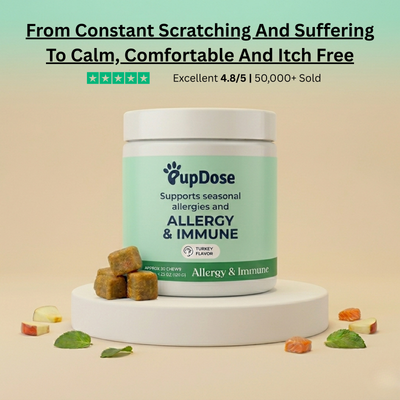
PupDose Allergy & Immune Support Chews were created for exactly this role. They're vet formulated with an in-house dog nutritionist, made with human-grade ingredients, formulated in the USA and lab tested. The chews hold a 4.8/5 average from verified buyers, and most owners report noticing a change in 2 to 3 weeks of daily use.
A few honest notes: - A supplement supports your dog's skin and immune health. It isn't a substitute for flea control, infection treatment or any medication your vet prescribes. - If your dog is already on an allergy medication, keep giving it as directed and let your vet know you're adding a supplement. - Give it consistently. Skin renews over weeks, so daily use matters more than any single dose.
Every order is covered by a 60-day money-back guarantee, so you can see how your dog does without risk.
The bottom line
When a dog is constantly itchy, there's almost always a reason, and it's usually allergies with an infection or fleas making things worse. Start with strict flea control, gentle bathing and a clean environment, keep a short itch log, and bring your vet in early so any infection is treated and a long-term plan is in place. Add daily skin and immune support as part of that plan, and give it a few weeks to show what it can do. Your dog will thank you with a quiet, scratch-free night.
Frequently asked questions
Why is my dog itchy but has no fleas?
The most common reasons are environmental allergies (pollen, dust mites, mold), food allergies, and secondary skin infections from yeast or bacteria. Dry skin and contact irritants can also cause itching. Keep in mind that fleas can be hard to spot, so a vet may still recommend flea control while ruling out other causes.
What can I give my dog for itching at home?
Gentle steps like a cool oatmeal-based bath, wiping paws after walks, keeping bedding clean and staying on year-round flea prevention can all help. Don't give human antihistamines or other medications without asking your vet first, since doses and safety vary by dog.
When should I worry about my dog scratching?
Call your vet if the itching is keeping your dog up at night, if you see open sores, scabs, hair loss, a bad smell, ear discharge, or swelling of the face, or if your dog seems unwell in any other way. Facial swelling with trouble breathing is an emergency.
Can food cause itchy skin in dogs?
Yes. Food allergies are less common than environmental allergies, but they do happen, usually as a reaction to a protein such as chicken or beef. The only reliable way to confirm one is a strict elimination diet of 8 to 12 weeks guided by your vet.
How long does it take for an allergy supplement to help my dog?
Daily supplements work gradually because skin renews itself over weeks. Most PupDose owners report noticing a change in 2 to 3 weeks of consistent daily use. Supplements are meant as daily support alongside your vet's care, not a replacement for it.