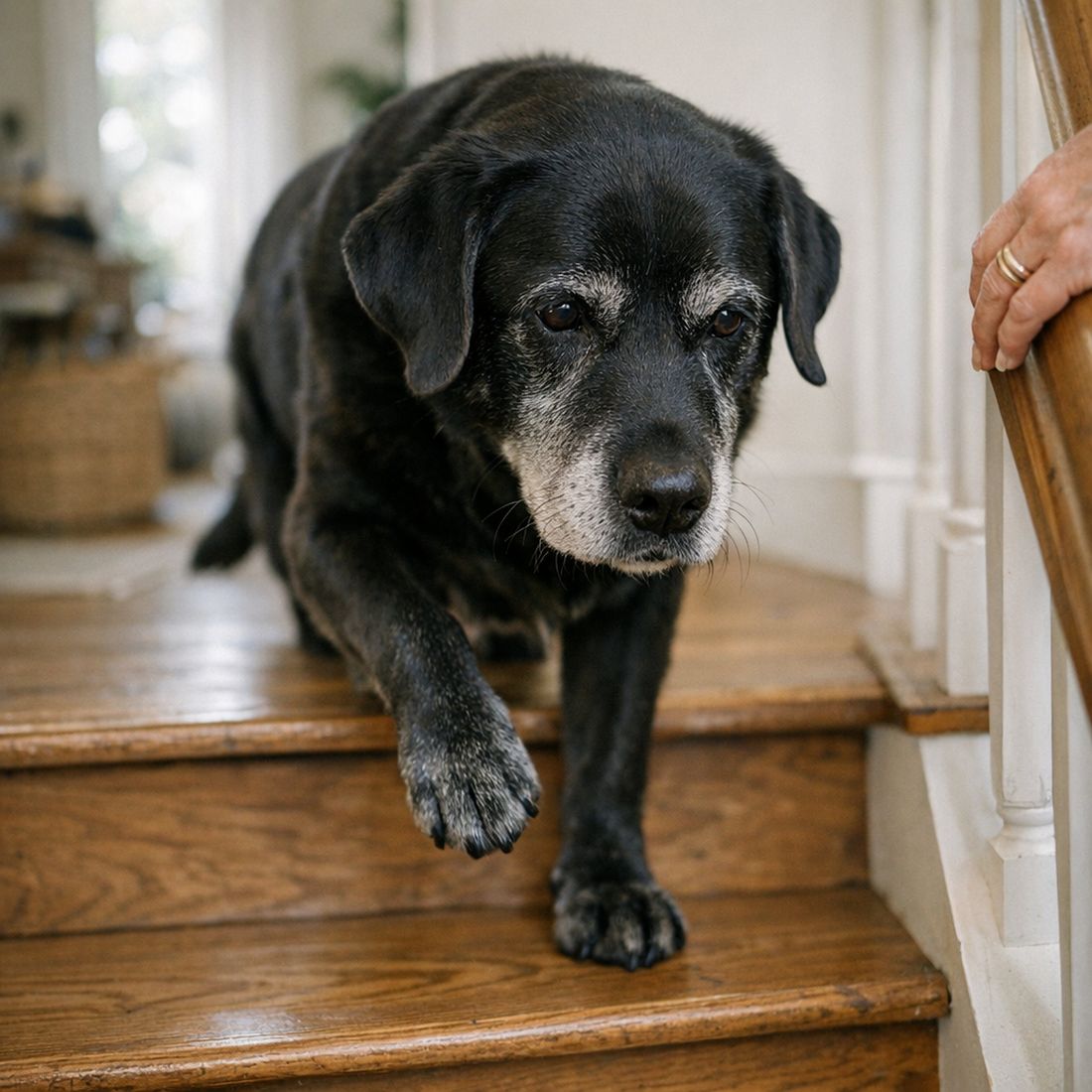
The most common signs of joint pain in dogs are stiffness after rest, reluctance to jump or climb stairs, slowing down on walks, and limping. Because these changes creep in slowly, many owners chalk them up to "just getting old," when the dog is actually uncomfortable.
The upside is that joint discomfort is very manageable, especially when you catch it early. Here's what to watch for, what you can do at home, and how to work with your vet.
Quick answer
- Stiffness after naps, hesitating to jump, and trouble on stairs are classic early signs.
- Osteoarthritis is the most common cause, and it affects a large share of senior dogs.
- Keeping your dog lean is one of the biggest things you can do for their joints.
- Never give human pain relievers like ibuprofen or acetaminophen to a dog.
- See your vet for sudden lameness, a leg your dog won't put weight on, swelling, or crying out in pain.
What causes joint pain in dogs?
Osteoarthritis
Osteoarthritis (also called degenerative joint disease) is the most common cause. The smooth cartilage that cushions the ends of bones wears down over time, the joint becomes inflamed, and the body lays down extra bone around the joint. The result is pain, stiffness and less range of motion. It's progressive, but how fast it progresses can be influenced a lot by weight, activity and care.
Developmental conditions
- Hip dysplasia: The ball and socket of the hip don't fit together properly, causing looseness and early arthritis. It's common in breeds like German Shepherds, Labradors, Golden Retrievers and Rottweilers.
- Elbow dysplasia: Abnormal development of the elbow joint, often seen in large, fast-growing breeds.
- Luxating patella: The kneecap slips out of place. Common in small breeds like Pomeranians, Yorkies and Chihuahuas, it can look like a "skip" in their step.
Injury
A torn cranial cruciate ligament (similar to an ACL in people) is one of the most common orthopedic injuries in dogs. It can happen suddenly during play or gradually from wear. Even after it's addressed, the knee is prone to arthritis.
Contributing factors
- Extra weight: More load on the joints, plus fat tissue releases substances that promote inflammation.
- Age: Joint changes accumulate over years.
- Breed and size: Large and giant breeds tend to show signs earlier.
- Activity patterns: Long stretches of inactivity followed by intense weekend exercise can be hard on joints.
How can I tell if my dog has joint pain?
Dogs rarely whimper about chronic pain. Instead, they quietly change how they move. Use this checklist and note any you've seen in the past month.
Joint discomfort checklist
| Sign | What it can look like |
|---|---|
| Stiffness after rest | Slow to get up after a nap, "warming up" over the first few minutes of a walk |
| Avoiding jumps | Hesitating at the couch, bed or car, or waiting to be lifted |
| Trouble with stairs | Slowing down, stopping halfway, or bunny-hopping up |
| Shorter walks | Lagging behind, sitting or lying down mid-walk |
| Limping or favoring a leg | Especially after exercise or first thing in the morning |
| Changes in posture | Hunched back, tucked rear, weight shifted forward |
| Muscle loss | Thinner back legs or hips, a more "bony" rear end |
| Licking a joint | Repeated licking of a wrist, knee or hip area |
| Mood changes | Irritability when touched, less interest in play, more sleeping |
| Accidents or trouble posturing | Difficulty squatting or lifting a leg to urinate or defecate |
If you check two or more boxes, it's worth bringing this list to your vet. Videos of your dog getting up or climbing stairs at home are very helpful, since dogs often move differently in the exam room.
Take Bella, a 10-year-old Lab mix who "just got lazy," and Max, a 7-year-old German Shepherd who stopped jumping into the car. In both cases, the real reason was joint discomfort, and both became more active once their owners and vets put a plan in place.
What can I do at home to help my dog's joints?
1. Help your dog stay lean
This is the single most powerful thing you control. Even a modest weight loss can make an overweight dog noticeably more comfortable. You should be able to feel your dog's ribs easily with light pressure and see a waist from above. Ask your vet for a target weight and a feeding plan.
2. Keep exercise regular and low-impact
Movement keeps joints lubricated and muscles strong. Aim for consistent daily activity rather than occasional long outings: - Several shorter walks instead of one long one - Walking on grass or dirt rather than pavement when possible - Swimming or underwater treadmill work, which build muscle without impact - Avoiding repetitive high-impact play like nonstop ball chasing or jumping for frisbees
3. Make your home joint-friendly
- Add rugs or runners on slippery floors so your dog doesn't slip and splay
- Use ramps or pet steps for the couch, bed and car
- Provide a thick, supportive orthopedic bed away from drafts
- Raise food and water bowls slightly for large dogs if that's more comfortable
- Keep nails trimmed, since long nails change how a dog stands and walks
4. Try gentle comfort care
Warmth often helps stiff joints. A warm (not hot) compress or a heated pet bed set to low can make mornings easier. Gentle massage and slow range-of-motion exercises, ideally shown to you by your vet or a rehab practitioner, can also help.
5. Never use human pain medication
Ibuprofen, naproxen, aspirin and acetaminophen can cause stomach ulcers, kidney damage, liver damage and worse in dogs. If your dog is in pain, your vet can prescribe options that are made for dogs.
When should I take my dog to the vet for joint pain?
Any ongoing change in how your dog moves is worth a vet visit. Your vet can examine the joints, may recommend X-rays, and can build a plan that might include prescription pain relief, rehab, weight management and supplements.
Red flags: call your vet promptly - Sudden lameness or a leg your dog won't put weight on - A joint that is swollen, hot or very painful to touch - Crying out, yelping or snapping when moving or being touched - Limping that lasts more than a day or two - Weakness, wobbling or dragging the back feet - Loss of bladder or bowel control - Pain along with fever, lethargy or not eating
Emergency: Sudden inability to stand or use the back legs, especially in long-backed breeds like Dachshunds, can be a spinal problem and needs immediate care.
If your dog is already on prescription pain or anti-inflammatory medication, keep giving it exactly as directed. Talk to your vet before adding or changing anything.
How does daily hip and joint support fit in?
Joint health is a long game. Many vets recommend a multimodal approach: weight control, smart exercise, prescription relief when needed, and daily nutritional support. Research on ingredients such as omega-3 fatty acids, glucosamine and chondroitin suggests they can support joint comfort and mobility in dogs, which is why they're so widely used.
PupDose Hip & Joint Chews are a daily chew made to support healthy joints, comfortable movement and long-term mobility. They're vet formulated with an in-house dog nutritionist, made with human-grade ingredients, formulated in the USA and lab tested. They hold a 4.8/5 average from verified buyers, and most owners report noticing a change in 2 to 3 weeks.
A few things to keep in mind: - Joint chews support mobility. They don't replace a vet exam, X-rays or any pain medication your vet prescribes. - Starting before signs are obvious is common for large breeds and active dogs. - Consistency matters. Give them every day.
Every order is backed by a 60-day money-back guarantee.
The bottom line
The signs of joint pain in dogs are easy to miss because they look like aging: slower mornings, skipped jumps and shorter walks. Trust what you're seeing. Keep your dog lean, keep them moving gently, make your home easier to navigate, and partner with your vet on a plan. With daily support and the right care, many older dogs get back to enjoying their walks again.
Frequently asked questions
What are the first signs of joint pain in dogs?
Early signs are often subtle: stiffness after resting, hesitating before jumping on the couch or into the car, slowing down on walks, and trouble on stairs. Many owners mistake these for normal aging, but they often point to joint discomfort worth discussing with your vet.
At what age do dogs start getting joint problems?
It varies. Large and giant breeds can show signs in middle age, and dogs with hip or elbow dysplasia can show signs in their first year or two. Most dogs show some degree of joint change in their senior years, which is why many vets recommend starting joint support early.
Can I give my dog human pain medicine for joint pain?
No. Common human pain relievers such as ibuprofen, naproxen and acetaminophen can be dangerous or even fatal for dogs. Your vet can prescribe dog-safe pain relief if your dog needs it.
Does weight affect my dog's joints?
Yes, a lot. Extra weight puts more load on every joint and fat tissue itself promotes inflammation. Keeping your dog lean is one of the most effective things you can do for joint comfort over their lifetime.
How long do hip and joint chews take to work?
Joint supplements work gradually. Most PupDose owners report noticing a change in 2 to 3 weeks of consistent daily use. They are designed as daily support alongside your vet's care, not as a replacement for any prescribed medication.