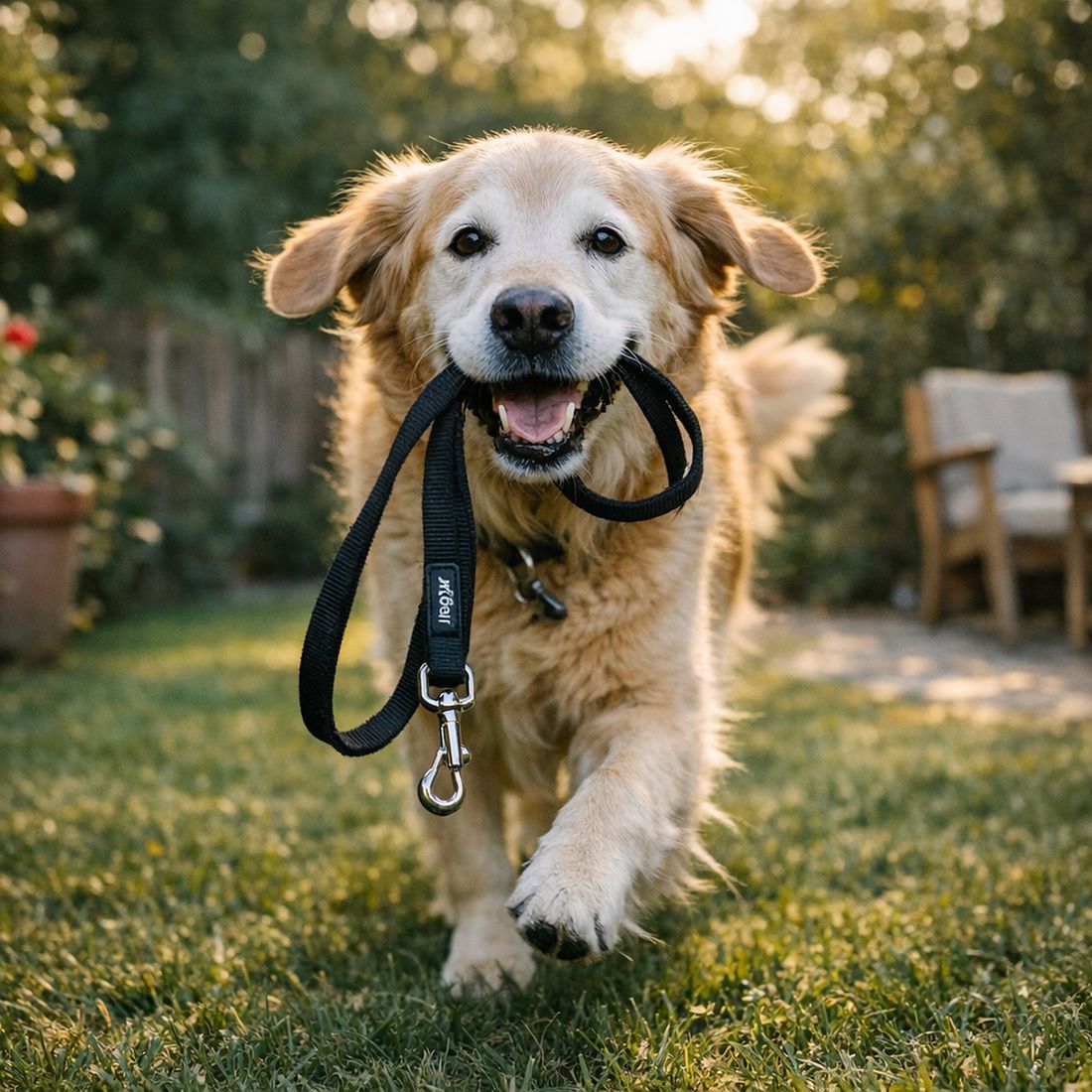
The most common signs your dog is getting old are a slower pace, more sleep, a graying muzzle, stiffness after rest, and small changes in how they think and react. Some of these are a normal part of aging. Others are signs of pain or a health problem that can be treated.
Aging isn't something to fix. It's something to support. Here's how to tell normal aging from a red flag, what you can do at home, and how to keep your vet in the loop.
Quick answer
- Gray fur, more sleep and a slower pace are normal signs of aging in dogs.
- Stiffness, weight changes, cloudy eyes and hearing loss are common, but worth mentioning to your vet.
- Confusion, night pacing and house-training accidents can be signs of cognitive changes your vet should assess.
- Daily walks, mental games, a senior-appropriate diet and twice-yearly checkups help most older dogs thrive.
- Sudden lethargy, not eating, collapse or rapid weight loss are never "just old age." Call your vet.
When is a dog considered a senior?
Size matters more than the number of candles on the cake. Larger dogs tend to age faster than smaller ones.
| Dog size | Typical senior age |
|---|---|
| Small (under 20 lbs) | Around 10 to 12 years |
| Medium (20 to 50 lbs) | Around 8 to 10 years |
| Large (50 to 90 lbs) | Around 7 to 8 years |
| Giant (over 90 lbs) | Around 5 to 6 years |
These are general ranges. Your vet can tell you when to start thinking of your dog as a senior and when to begin senior screening tests.
What are the signs your dog is getting old?
Physical signs
- Graying fur, especially around the muzzle, eyes and paws
- Slower walks and shorter bursts of play
- Stiffness when getting up, especially after a nap or on cold mornings
- Trouble with stairs, jumping into the car or onto the couch
- Weight changes, either gain from less activity or loss of muscle along the back and hips
- Cloudy eyes. A bluish haze called nuclear sclerosis is common and usually doesn't affect vision much, but cataracts look similar and can.
- Hearing loss, like sleeping through the doorbell or not coming when called
- Dental changes, including tartar, bad breath and chewing more carefully
- Lumps and bumps. Many are harmless fatty growths, but every new lump should be checked by your vet.
Energy and sleep changes
Most senior dogs sleep more and nap more deeply. Take Biscuit, a 12-year-old Beagle who used to patrol the backyard all afternoon. Now she's happy with a morning sniff walk and a long nap in the sun. That kind of gradual shift is normal.
Senior dog lethargy that comes on quickly is different. If your dog suddenly doesn't want to get up, skips meals or tires after a few steps, something else may be going on. Arthritis pain, thyroid problems, heart disease, anemia and kidney disease can all show up as low energy.
Behavior and cognitive changes
Just like people, dogs can have changes in memory and awareness as they age. Vets call the more significant version canine cognitive dysfunction. It's diagnosed by your vet after ruling out other causes.
Signs to watch for:
- Getting stuck behind furniture or in corners
- Staring at walls or into space
- Pacing, whining or waking up at night
- Forgetting house training
- Not recognizing familiar people or other pets
- Less interest in greeting you, playing or being petted
- New anxiety, clinginess or irritability
Max, a 13-year-old Lab mix, started standing at the hinge side of the door waiting to go out. His owner thought it was a quirk until it happened every day. That's the kind of detail worth writing down and bringing to your vet.
Is it normal aging or something more?
This table can help you sort what to watch from what to act on. It's a guide, not a diagnosis.
| What you notice | Often normal aging | Talk to your vet if |
|---|---|---|
| Sleeping more | Gradual, still eager for meals and walks | Sudden, or your dog seems weak or uninterested |
| Slowing down | Shorter walks, still enjoys them | Limping, yelping, refusing stairs or walks |
| Gray muzzle | Always normal | Not a concern |
| Cloudy eyes | Bluish haze, still navigates well | Bumping into things, red or painful eyes |
| Weight change | Small shifts with activity level | Rapid loss or gain, or a swollen belly |
| Behavior change | Slightly more set in their ways | Confusion, night pacing, accidents, anxiety |
| Drinking more | Not typical of normal aging | Always worth a check |
How can I help my aging dog at home?
1. Keep them moving, gently
Regular, low-impact exercise helps maintain muscle and keeps joints moving. Two or three shorter walks often work better than one long one. Swimming is great for many seniors. Let your dog set the pace.
2. Exercise their brain
Mental stimulation matters as much as physical activity for older dogs. Try:
- Puzzle feeders and snuffle mats
- Short training sessions to learn a new trick
- "Find it" games with treats hidden around the room
- New walking routes with fresh smells to explore
3. Feed for their life stage
Senior dogs often need fewer calories but still need high-quality protein to hold onto muscle. Ask your vet whether a senior or prescription diet makes sense for your dog. Keeping your dog lean is one of the best things you can do for their joints and comfort.
4. Make the home senior-friendly
- Add rugs or runners on slippery floors
- Use ramps or steps for the car and couch
- Offer a supportive orthopedic bed in a warm, quiet spot
- Raise food and water bowls if bending seems uncomfortable
- Use night lights if your dog seems unsure in the dark
5. Keep a steady routine
Predictable meals, walks and bedtimes help many older dogs feel secure, especially those with cognitive changes.
6. Don't skip senior checkups
Many vets recommend exams every six months for senior dogs, often with bloodwork and a urine test. Problems caught early are usually easier to manage, and your vet can track subtle changes you might not notice day to day.
When should I take my senior dog to the vet?
Between regular checkups, call your vet if you notice any of these red flags:
Red flags: call your vet - Sudden lethargy or weakness - Not eating for more than a day, or a big drop in appetite - Drinking or urinating much more than usual - Rapid weight loss or gain, or a swollen belly - Limping, crying out, or refusing stairs and walks - Coughing, breathing harder at rest, or tiring very quickly - New lumps, or lumps that grow or change - Confusion, disorientation, night pacing or new accidents in the house - Vomiting or diarrhea that doesn't clear up in a day
Emergency: go now - Collapse, seizures, trouble breathing, pale gums, a hard swollen belly with retching, or sudden inability to stand.
Your vet may suggest bloodwork, a urine test, blood pressure checks, X-rays or a cognitive assessment. If your dog is diagnosed with a condition, follow the plan your vet gives you, including any prescribed medication.
What about NAD+ for dogs?
NAD+ (nicotinamide adenine dinucleotide) is a molecule found in every cell. It plays a role in how cells turn food into energy. Research suggests NAD+ levels tend to decline with age, which is why it has become a popular topic in aging research.
Here's the honest picture. Most of the research on NAD+ and its precursors, like NMN (nicotinamide mononucleotide), comes from lab and animal studies. It's interesting and still early, and it has not been proven in dogs. Anyone who promises that a supplement will make your dog live longer is getting ahead of the science.
What NAD+ support can reasonably be is one part of a daily routine for healthy aging, alongside good food, exercise, enrichment and vet care.
How does daily support fit in?
Healthy aging is built on small daily habits. Alongside your vet's care, many owners add a supplement designed to support energy and vitality in their senior dog.
PupDose Longevity Drops support healthy aging, energy and vitality. Each serving contains 100mg of NAD+ and 30mg of NMN, plus CoQ10 and resveratrol. You give 2 droppers on your dog's food once a day, and the beef and apple flavor makes it easy for most dogs to accept.
The drops are vet formulated with an in-house dog nutritionist, formulated in the USA, made with human-grade ingredients, lab tested and handcrafted in small batches. They hold a 4.8/5 average from verified buyers, and most owners notice changes in alertness and energy within 2 to 3 weeks.
A few honest notes: - A supplement supports healthy aging. It doesn't replace senior checkups, a vet diagnosis or any treatment your vet recommends. - If your dog takes medication or has a health condition, keep giving their medication as directed and check with your vet before adding the drops. - Give it consistently. Daily routines matter more than any single dose.
Every order is covered by a 60-day money-back guarantee, so you can see how your dog does without risk.
The bottom line
Signs your dog is getting old, like a gray muzzle, more naps and a slower pace, are a normal part of a long life together. Sudden changes, confusion, pain and appetite or weight shifts are worth a call to your vet. Keep your senior dog moving, give their brain something to do, feed for their life stage, make home comfortable and keep up with twice-yearly checkups. Add daily support as part of that routine, and enjoy the slower, sweeter years with your dog.
Frequently asked questions
At what age is a dog considered a senior?
It depends on size. Small dogs are often considered seniors around 10 to 12 years old, medium dogs around 8 to 10, and large and giant breeds as early as 6 to 8. Many vets use a simple rule: a dog becomes a senior in the last quarter of their expected lifespan.
Is it normal for an old dog to sleep all day?
Older dogs do sleep more, often 16 to 18 hours a day. What isn't normal is a sudden change, like a dog who no longer wants to get up for meals or walks, or who seems weak or confused. Sudden lethargy deserves a vet visit, because pain, thyroid problems, heart disease and other treatable issues can look like 'just getting old.'
What are the signs of cognitive decline in dogs?
Common signs include getting stuck in corners, staring at walls, pacing at night, forgetting house training, not recognizing familiar people, and new anxiety. Your vet can assess these signs and talk through options, which may include diet changes, enrichment and prescription treatments.
Is NAD+ safe for dogs?
Research on NAD+ and its precursors like NMN is still early and comes mostly from lab and animal studies, not large studies in dogs. If you're considering an NAD+ supplement, choose a product made for dogs, follow the label and let your vet know, especially if your dog takes medication or has a health condition.
How long does it take to notice a difference with Longevity Drops?
Most owners notice changes in alertness and energy within 2 to 3 weeks of consistent daily use. The drops are meant as daily support for healthy aging alongside regular senior checkups with your vet, not a replacement for them.