Most of the time, bad breath in dogs comes from plaque, tartar and gum disease, not from what they ate. Bacteria build up along the gumline and release smelly sulfur compounds. Less commonly, persistent bad breath can be a clue to a health problem elsewhere in the body.
Either way, a stinky mouth is worth paying attention to. Here's how to tell what's going on, what you can do at home, and when your dog needs a vet.
Quick answer
- Plaque and gum disease cause most cases of dog bad breath.
- Most dogs show signs of dental disease by age three.
- Daily brushing with dog toothpaste is the gold standard for home care.
- Never use human toothpaste on dogs. Some contain xylitol, which is toxic to them.
- See your vet for bleeding gums, loose or broken teeth, facial swelling, trouble eating, or sweet or urine-like breath.
What causes bad breath in dogs?
Plaque, tartar and periodontal disease
This is the big one. Within hours after a meal, a sticky film of bacteria called plaque forms on the teeth. If it isn't removed, minerals in saliva harden it into tartar (calculus) within a few days. Tartar is rough, so even more plaque sticks to it.
The bacteria then move below the gumline, causing gingivitis (inflamed gums) and eventually periodontitis, which damages the tissues and bone holding the teeth in place. Periodontal disease is one of the most common health problems vets see in adult dogs, and it is often painful even though dogs rarely show it.
Small and toy breeds, like Yorkies, Chihuahuas, Dachshunds and Pomeranians, are especially prone because their teeth are crowded. Flat-faced breeds have similar issues.
Something your dog ate
Dogs eat things we'd rather not think about: garbage, poop, dead things on walks. This causes short-term bad breath that should fade within a day.
Oral problems besides plaque
- Broken or fractured teeth, which can become infected
- Tooth root abscesses
- Retained baby teeth trapping food
- Foreign objects like sticks or bone fragments stuck between teeth or on the roof of the mouth
- Oral growths or tumors, more common in older dogs
Health conditions elsewhere in the body
Less often, breath can reflect what's happening inside: - Sweet or fruity breath can be associated with diabetes. - Urine or ammonia-like breath can be associated with kidney disease. - Very foul breath with vomiting, yellowing gums or eyes can be linked to liver problems. - Fishy breath may come from anal gland licking, though dental bacteria are more common.
How can I tell if my dog's bad breath is dental disease?
Lift your dog's lip in good light and take a look. Check the back teeth too, which is where tartar often builds first.
Dental health checklist
| What you see | What it may mean |
|---|---|
| White teeth, pink gums, mild breath | Healthy mouth |
| Yellow film near the gumline | Plaque build-up |
| Hard brown or tan crust on teeth | Tartar (calculus) |
| Red line along the gumline, gums bleed easily | Gingivitis |
| Receding gums, loose teeth, pus | Periodontal disease |
| Swelling under the eye or on the jaw | Possible tooth root abscess |
Signs your dog's mouth may hurt
Dogs are experts at hiding dental pain. Watch for: - Chewing on one side of the mouth or dropping food - Pawing at the face or rubbing the muzzle on the floor - Reluctance to chew hard kibble or toys - Drooling more than usual, sometimes with blood - Sneezing or nasal discharge, which can come from upper tooth root infections - Being head-shy when you touch their face
Many owners say their dog seemed "younger" and more playful after dental problems were treated, which shows how much quiet discomfort dogs can carry.
How can I fix my dog's bad breath at home?
Home care can't remove existing tartar, but it can slow new plaque, freshen breath and protect the results of a professional cleaning.
1. Brush daily (or as close to daily as you can)
Brushing is the most effective thing you can do. Plaque turns into tartar in a matter of days, so brushing a few times a week helps, but daily is best.
How to get started: 1. Use a dog toothpaste (they come in flavors like poultry) and a soft dog toothbrush or finger brush. 2. Start by letting your dog lick the paste off your finger for a few days. 3. Gently rub the outer surfaces of the teeth with your finger, then switch to the brush. 4. Focus on the outside surfaces and the gumline, especially the back teeth and canines. Most dogs' tongues handle the inner surfaces. 5. Keep sessions short, about 30 seconds to start, and finish with praise or a treat.
Never use human toothpaste. Some contain xylitol, which is toxic to dogs, and fluoride and foaming agents aren't meant to be swallowed.
2. Choose dental chews and toys wisely
Look for products designed to reduce plaque and tartar. Avoid very hard items like antlers, real bones and hard nylon, which can fracture teeth. A good rule: if you can't press a fingernail into it, it's too hard.
3. Add a daily dental routine to food or water
Water additives and food-topper dental powders are easy options for dogs who won't tolerate brushing, and they work well as an add-on for dogs who do.
4. Feed a complete, balanced diet
Good nutrition supports gum health. Some prescription dental diets are designed to help scrub teeth as dogs chew; ask your vet if one makes sense.
5. Keep up with professional cleanings
Your vet will recommend a cleaning under anesthesia based on what they see. Anesthesia lets the team clean below the gumline, take dental X-rays and treat problems safely. Anesthesia-free "teeth scraping" only removes visible tartar and can miss the disease that matters most.
When should I take my dog to the vet for bad breath?
Bad breath that doesn't improve after a week or two of good home care deserves a vet visit. Your vet can also tell you whether a professional cleaning is due.
Red flags: call your vet - Bleeding, swollen or very red gums - Loose, broken or discolored teeth - Swelling on the face, jaw or under an eye - Difficulty eating, chewing on one side, or dropping food - A lump or growth in the mouth - Excessive drooling or blood in saliva - Sweet, fruity or urine-like breath - Bad breath along with increased thirst, frequent urination, vomiting, weight loss or low energy
See your vet urgently if your dog can't close their mouth, won't eat at all, has a stick or object stuck in their mouth, or has sudden severe facial swelling.
How does a daily dental powder fit in?
Think of dental health like your own: professional cleanings handle the deep work, and daily habits keep things in good shape between visits. For many households, daily brushing is a struggle. That's where an easy, consistent routine helps.
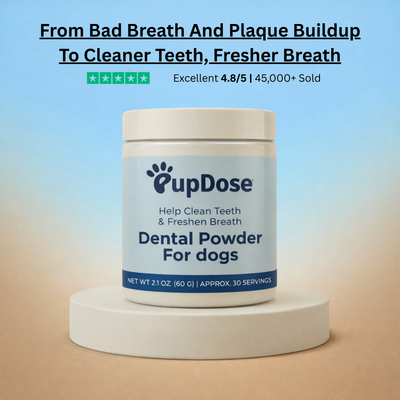
PupDose Dental Powder is a sprinkle-on daily powder that supports fresher breath, cleaner-looking teeth and healthy gums as part of your dog's routine. It's vet formulated with an in-house dog nutritionist, made with human-grade ingredients, formulated in the USA and lab tested. It holds a 4.8/5 average from verified buyers, and most owners report noticing a change in 2 to 3 weeks.
Keep it in perspective: - A dental powder supports oral health. It does not remove existing tartar or replace professional cleanings. - If your vet has recommended a cleaning, extraction or any treatment, follow that plan. Daily support works best on a clean starting point. - Brushing, when your dog accepts it, is still worth doing alongside a powder.
Every order comes with a 60-day money-back guarantee.
The bottom line
Persistent dog bad breath is usually a sign of plaque and gum disease, and it rarely gets better on its own. Take a look in your dog's mouth, start a simple daily routine, avoid human toothpaste and overly hard chews, and have your vet check for disease below the gumline. With consistent home care and regular checkups, fresher breath and a more comfortable mouth are very achievable.
Frequently asked questions
Is bad breath in dogs normal?
A mild 'doggy' smell is normal, but strong, persistent bad breath is not. In most cases it points to plaque, tartar and gum disease, which affects the majority of dogs by age three. It's worth having your vet look at your dog's teeth.
Why does my dog's breath smell like fish?
A fishy or rotten smell usually comes from bacteria in plaque and tartar along the gumline. Less often, it can come from eating something unpleasant or licking the rear end, especially in dogs with anal gland issues. If the smell persists, have your vet check your dog's mouth.
How can I freshen my dog's breath at home?
Daily tooth brushing with a dog-safe toothpaste is the single most effective habit. Vet-approved dental chews, water additives or a daily dental powder can help as part of a routine. Never use human toothpaste, which can contain xylitol, a sweetener that is toxic to dogs.
Can bad breath be a sign of something serious?
Sometimes. Sweet or fruity breath can be linked to diabetes, and breath that smells like urine or ammonia can be linked to kidney problems. If bad breath comes with increased thirst, weight loss, vomiting or low energy, see your vet promptly.
Do I still need professional dental cleanings if I brush and use a dental supplement?
Yes. Home care slows plaque build-up, but once tartar forms it can only be removed by a vet, and the most important disease happens below the gumline where you can't see it. Home care and professional cleanings work best together.