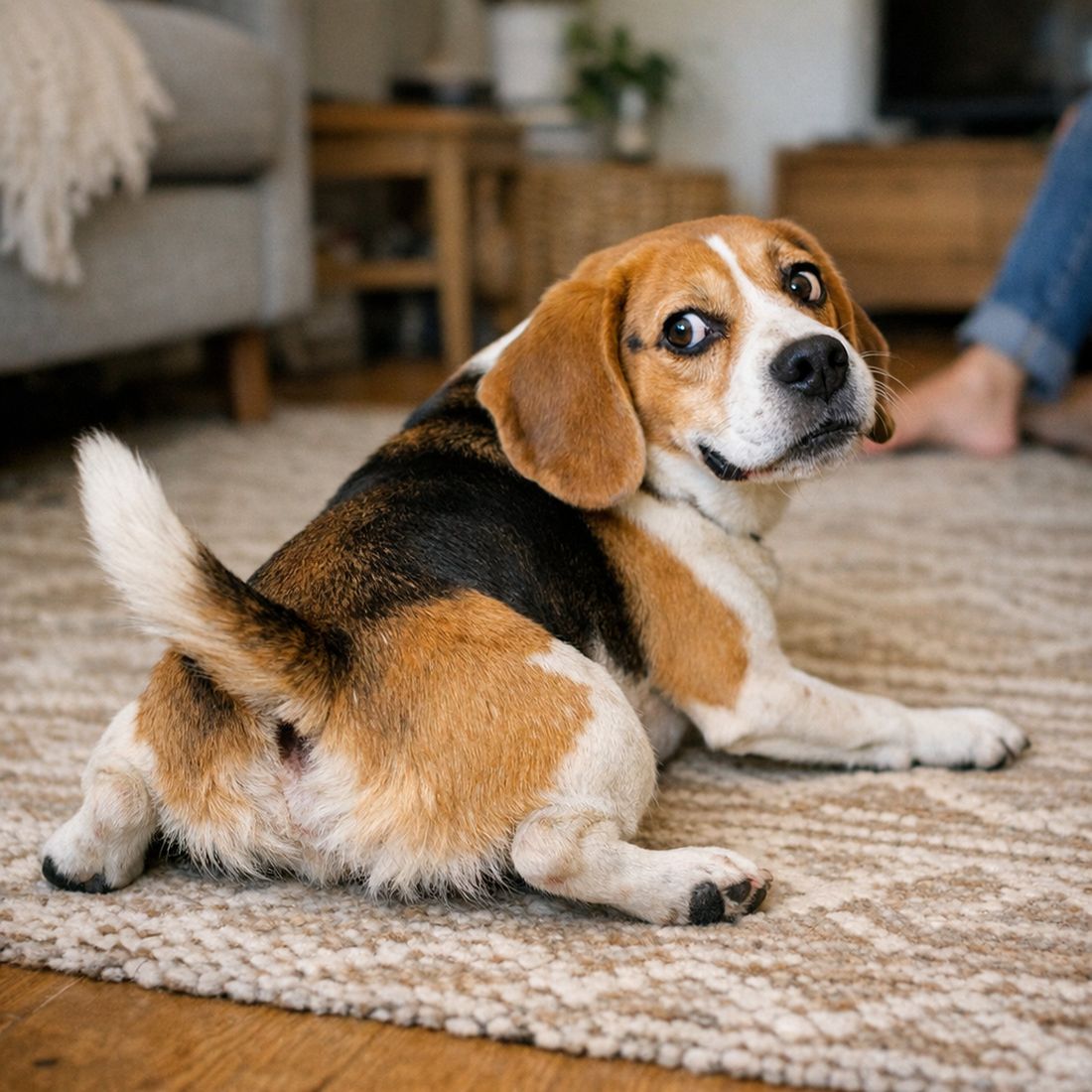
When a dog drags their rear end across the floor, the most common reason is that their anal glands are full, irritated or not emptying properly. Scooting is your dog's way of trying to relieve that pressure or itch. Allergies, worms and skin irritation can cause it too.
A one-time scoot is usually nothing to worry about. Frequent scooting is a signal worth acting on. Here's what's going on, how to help, and when your dog needs a vet.
Quick answer
- Full or irritated anal glands are the top reason dogs scoot.
- Other causes include allergies, worms, skin irritation and stool stuck to the fur.
- Firm, well-formed stool helps the glands empty naturally.
- Leave gland expression to your vet or a trained groomer.
- See your vet for swelling, bleeding, pus, a painful rear end, or scooting that keeps happening.
What are anal glands, and why do they cause problems?
Anal glands (also called anal sacs) are two small pouches just inside your dog's anus, at roughly the 4 and 8 o'clock positions. They produce a strong-smelling, oily fluid that acts like a scent signature, which is part of why dogs sniff each other's rear ends.
Normally, the glands empty a little each time your dog passes a firm stool. When that doesn't happen, the fluid thickens and builds up. This can lead to:
- Impaction: The fluid gets thick and the glands can't empty. This is uncomfortable and is the most common gland problem.
- Infection (sacculitis): Bacteria grow in the trapped fluid, causing pain and inflammation.
- Abscess: A painful, swollen pocket of infection that can rupture through the skin.
- Masses: Less common, but anal sac tumors do occur, mostly in older dogs, so any lump in the area needs a vet's attention.
What causes anal gland problems in dogs?
Several factors make some dogs more prone than others:
- Soft stool or diarrhea: Without firm stool to press on the glands, they don't empty well. This is one of the biggest factors.
- Low-fiber diet: Not enough fiber can lead to softer or smaller stools.
- Allergies: Environmental and food allergies cause inflammation around the anus and gland ducts. Many dogs with recurring gland issues also have itchy paws or ears.
- Excess weight: Extra tissue around the rear end makes it harder for glands to empty.
- Small breed size: Small breeds like Chihuahuas, Shih Tzus, Cavalier King Charles Spaniels, Miniature Poodles and Beagles are more commonly affected, though any dog can be.
- Gland anatomy: Some dogs simply have narrow ducts or glands positioned in a way that makes emptying harder.
Is it always the anal glands? Other reasons dogs scoot
Scooting has a few other common causes. Here's how they compare.
| Cause | Other clues |
|---|---|
| Full or impacted anal glands | Fishy smell, licking the rear, discomfort sitting, scooting after pooping |
| Allergies | Also itchy paws, ears or belly; red skin around the rear |
| Tapeworms | Small, rice-like segments near the anus or in stool; history of fleas |
| Other intestinal worms | Weight loss, soft stool, a pot-bellied look in puppies |
| Stool or matted fur stuck to the rear | Visible mess, common in long-haired dogs |
| Skin irritation or wounds | Redness, sores, recent grooming or clipper irritation |
| Anal gland infection or abscess | Swelling, redness, pain, bleeding or pus, a hole near the anus |
Tapeworms are spread by fleas, so a dog with tapeworms also needs flea control. Your vet can confirm worms with a stool test or by looking at segments you bring in.
Signs of anal gland problems to watch for
Your dog may be dealing with gland trouble if you notice:
- Scooting on the floor, grass or carpet
- Licking or biting at the rear end or base of the tail
- A strong fishy smell, or fishy spots on bedding or furniture
- Straining or discomfort when pooping
- Turning suddenly to look at the tail or "chasing" the rear
- Reluctance to sit, or sitting oddly
- Redness or swelling on one or both sides of the anus
Take Daisy, a 5-year-old Cavalier who scoots after every walk, and Ollie, a 4-year-old Beagle who started leaving fishy spots on the couch. Both had glands that weren't emptying well, and both improved once their owners and vets focused on stool quality and regular checkups.
What can I do at home to help my dog?
1. Focus on stool quality
Firm, well-formed stool is the natural way glands empty. Feed a complete, consistent diet, avoid frequent food switches and table scraps, and address diarrhea quickly. Your vet may suggest adding fiber, such as plain canned pumpkin (not pie filling) or a fiber supplement. Start small and ask your vet about the right amount for your dog's size.
2. Keep your dog at a healthy weight
A lean body condition helps glands empty and supports overall digestive health.
3. Keep the area clean
For long-haired dogs, a "sanitary trim" around the rear helps prevent stool from sticking. Gently wipe with a damp cloth or pet-safe wipe if your dog has a messy moment.
4. Stay on flea and deworming schedules
This rules out tapeworms and other parasites as a cause of scooting.
5. Manage allergies
If your dog also has itchy skin, ears or paws, work with your vet on an allergy plan. Calming the skin often helps the rear end too.
6. Don't try to express the glands yourself
Expressing glands takes training. Doing it incorrectly can hurt your dog, push infection deeper or damage the tissue. Leave it to your vet or a trained groomer, and only when it's needed.
When should I take my scooting dog to the vet?
If your dog scoots more than once or twice, or shows any other signs of discomfort, schedule a vet visit. Your vet can check and express the glands, look for infection, and check for worms or other causes.
Red flags: call your vet promptly - Swelling, redness or a firm lump on either side of the anus - Bleeding, pus or a draining hole near the rear end - Your dog cries, snaps or flinches when the area is touched - Straining to poop, or not pooping - Scooting that keeps coming back even after the glands were emptied - Fever, lethargy or loss of appetite - Any new lump in the area, especially in an older dog
A ruptured anal gland abscess may look alarming, but it's very treatable. Get your dog to the vet the same day.
If your vet has prescribed antibiotics, anti-inflammatories or other treatments, finish them as directed and follow up as recommended.
How do daily anal gland chews fit in?
For dogs who are prone to gland trouble, a daily routine that supports digestion and stool quality can make a real difference between vet visits. That's the idea behind anal gland supplements, which typically focus on fiber and digestive support.
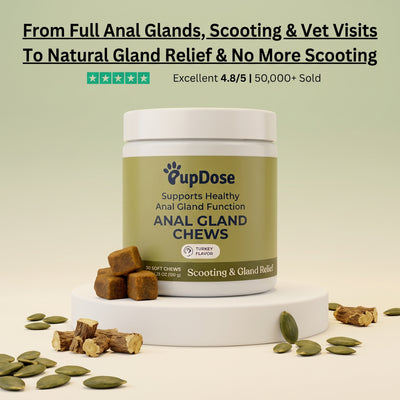
PupDose Anal Gland Chews are a daily chew designed to support healthy anal gland function, firm stools and digestive health. Most owners report noticing a change in 1 to 2 weeks. They're vet formulated with an in-house dog nutritionist, made with human-grade ingredients, formulated in the USA and lab tested, with a 4.8/5 average from verified buyers.
Keep in mind: - Daily chews support gland and digestive health. They aren't a fix for an infected, impacted or abscessed gland. Those need your vet. - If your dog is on any treatment for their glands, keep following your vet's instructions. - Consistency matters, since stool quality builds day by day.
Every order is covered by a 60-day money-back guarantee.
The bottom line
When your dog is scooting, the anal glands are the most likely reason, but allergies, worms and skin irritation are worth ruling out too. Focus on firm stool, a healthy weight and good hygiene, keep up with parasite prevention, and let your vet handle gland expression and any signs of infection. With a steady daily routine and regular checkups, most dogs can leave the floor-dragging behind.
Frequently asked questions
Why does my dog keep scooting?
The most common reason is full or irritated anal glands. Other causes include allergies, worms (especially tapeworms), skin irritation, matted fur or stool stuck around the rear, and less commonly, an infection or mass. If scooting happens more than once or twice, have your vet take a look.
What does it mean when my dog smells like fish?
A strong fishy smell from your dog's rear end is usually anal gland fluid. Dogs can release it when scared or excited, but frequent fishy odor or leaking often means the glands aren't emptying normally.
Should I express my dog's anal glands at home?
It's best to leave this to your vet or a trained groomer. Done incorrectly, expressing the glands can cause pain, swelling or injury. Routine expression in dogs without problems isn't usually needed, and frequent manual expression can sometimes make glands less able to empty on their own.
Does fiber help with anal gland problems?
For many dogs, yes. Firm, well-formed stool puts natural pressure on the glands as it passes, which helps them empty. Fiber helps support stool quality. Ask your vet how much fiber is right for your dog before making big diet changes.
How long do anal gland chews take to work?
Most PupDose owners report noticing a change in 1 to 2 weeks of daily use. These chews support gland and digestive health as part of a routine and are not a substitute for vet care if your dog has pain, swelling or infection.