Dog anxiety is a fear or stress response to something your dog sees as a threat, like loud noises, being left alone, new people or places. You'll usually see it as panting, pacing, trembling, hiding, whining or destructive behavior. Most anxious dogs can feel a lot better with the right mix of environment changes, training and support.
Here's how to read your dog's signals, what to do in the moment, and when to get your vet involved.
Quick answer
- Common signs: panting, pacing, trembling, hiding, lip licking, whining and accidents.
- Noise fears (storms, fireworks) and separation anxiety are the most common types.
- It's okay to comfort a scared dog. You can't "reward" fear.
- Never punish anxious behavior. It makes fear worse.
- See your vet for panic, self-injury, escape attempts, aggression or sudden behavior changes.
What causes anxiety in dogs?
Anxiety rarely has a single cause. It usually comes from a mix of genetics, early experiences and current triggers.
Common types of dog anxiety
- Noise anxiety: Fear of thunderstorms, fireworks, construction or even household sounds. Some dogs also react to the pressure changes and static before a storm.
- Separation anxiety: Distress when left alone or separated from a specific person. It often starts after a change in routine, like a move, a new job schedule or the end of a long period at home.
- Social or stranger anxiety: Fear of new people, children or other dogs, often linked to limited socialization as a puppy.
- Travel and vet anxiety: Stress around car rides, carriers or clinic visits, sometimes from motion sickness or a past bad experience.
- Generalized anxiety: A dog who seems on edge much of the time, without one clear trigger.
Factors that can make anxiety worse
- Lack of socialization during puppyhood (roughly 3 to 14 weeks)
- A frightening or traumatic experience
- Big changes at home: moving, a new baby, a new pet, losing a companion
- Not enough exercise or mental stimulation
- Aging. Senior dogs can develop new anxieties, sometimes linked to cognitive changes, vision or hearing loss
- Pain. A dog who hurts is often more anxious and reactive, which is why a vet check matters
How can I tell if my dog is anxious?
Dogs communicate stress with their whole body. Many signs are subtle, and they often escalate if the trigger continues.
Anxiety signs checklist
| Level | What you may see |
|---|---|
| Mild | Yawning when not tired, lip licking, turning the head away, "whale eye" (whites of the eyes showing), ears pinned back |
| Moderate | Panting, pacing, trembling, tucked tail, whining, clinginess, refusing food or treats |
| Severe | Hiding, drooling, trying to escape, destructive chewing or digging, house accidents, barking or howling nonstop |
| Panic | Frantic escape attempts, injuring themselves on crates, doors or windows, not responding to you at all |
A dog who won't take a favorite treat is usually too stressed to learn or relax in that moment. That's a useful cue to reduce the intensity of the situation.
For example, Luna, a 3-year-old Border Collie, starts pacing and panting hours before a storm. Cooper, a 6-year-old rescue mix, howls and scratches at the door within minutes of his family leaving. Same underlying emotion, very different triggers and plans.
How do I calm an anxious dog?
During storms and fireworks
- Create a safe den. Choose an interior room, closet or crate with a cover (door left open). Add familiar bedding and a worn T-shirt with your scent.
- Block sights and sounds. Close windows, blinds and curtains. Play steady white noise, a fan, or calm music to mask booms.
- Plan potty breaks early. Take your dog out before fireworks or the storm start, on a leash. Frightened dogs can bolt, even from a fenced yard.
- Offer something to do. Lick mats, stuffed food toys and long-lasting chews help many dogs self-soothe.
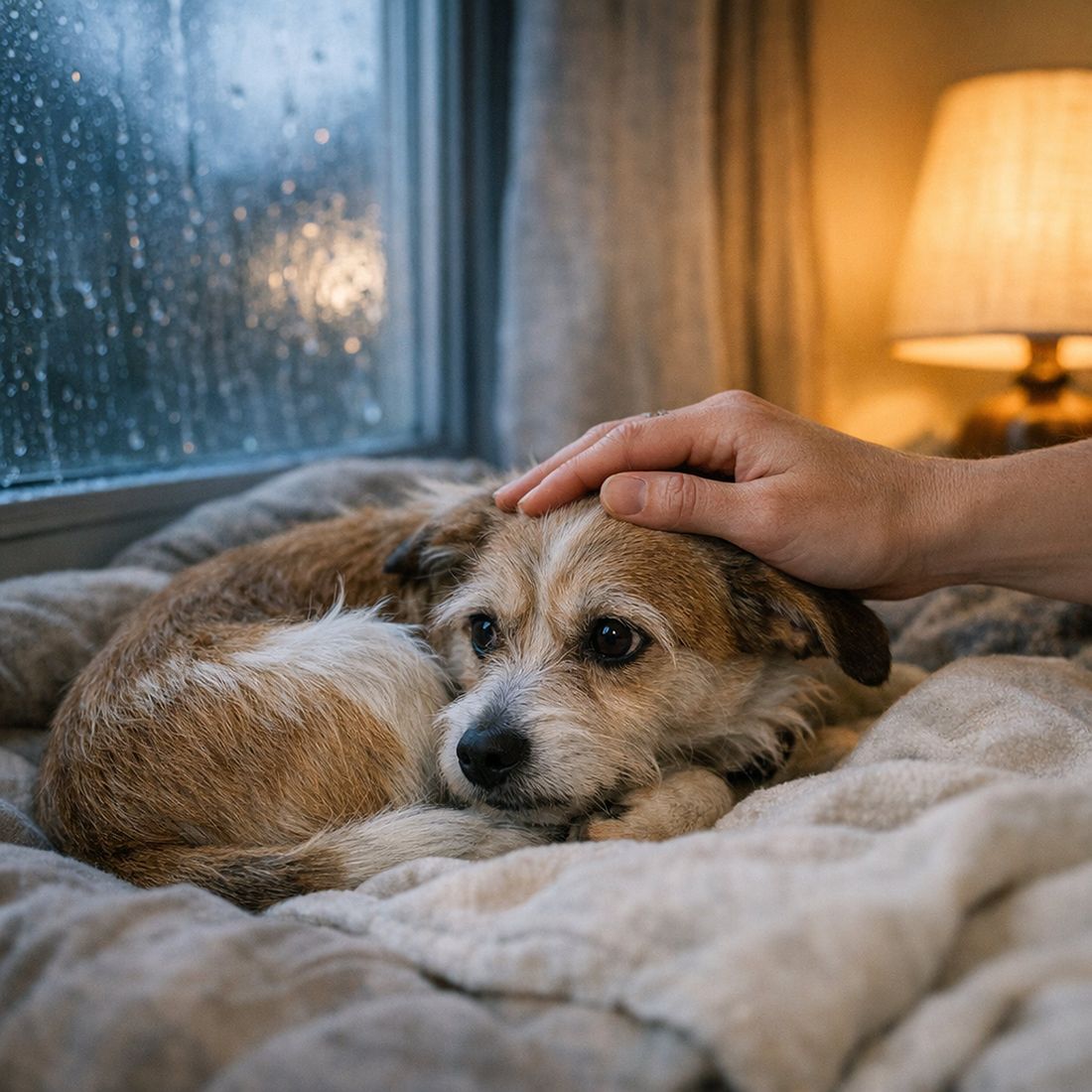
- Stay calm and present. Speak softly, sit nearby, and offer gentle petting if your dog seeks it. Let them choose where they want to be.
- Make sure ID is current. Microchip details and tags should be up to date, since more dogs go missing around fireworks holidays than at almost any other time.
For separation anxiety
- Practice short absences. Start with leaving for seconds, then minutes, building slowly while your dog stays relaxed. This is called desensitization.
- Make departures boring. Skip big goodbyes and dramatic hellos.
- Change your departure cues. Pick up keys or put on shoes without leaving, so these cues lose their meaning.
- Exercise before you go. A good walk and a sniff-heavy outing help your dog settle.
- Use enrichment. A frozen stuffed toy given only when you leave can create a positive association.
- Avoid crating if it increases panic. Some dogs with separation anxiety do worse confined. A dog-proofed room may be better.
- Consider a camera. Seeing what happens while you're gone helps you and your vet understand the problem.
Severe separation anxiety often needs a structured plan from your vet, a veterinary behaviorist or a certified trainer who uses reward-based methods.
Everyday habits that lower stress
- Predictable routines for meals, walks and bedtime
- Daily exercise matched to your dog's age and energy
- Mental work: sniff walks, puzzle feeders, short training games
- Reward-based training that builds confidence
- A quiet retreat space where your dog is never bothered
What not to do
- Don't punish or scold anxious behavior, including accidents or destruction. It increases fear.
- Don't force your dog to "face" their fear (flooding). It usually backfires.
- Don't use devices designed to startle or cause discomfort.
- Don't give human sedatives or anxiety medications. Many are unsafe for dogs.
When should I talk to my vet about dog anxiety?
Anxiety is a health issue, not a training failure. Your vet can rule out pain and medical causes, and for some dogs, prescription medication is the right and kind choice. Behavior work and medication often work best together.
Red flags: call your vet - Panic attacks, frantic escape attempts or self-injury - Aggression, growling or snapping that is new or getting worse - Anxiety that is getting worse over time or happening most days - Not eating, vomiting or diarrhea linked to stress - Sudden behavior changes in an adult or senior dog, like new fears, nighttime pacing or confusion - Destructive behavior that puts your dog at risk of injury or swallowing objects
If your dog has a known fear of fireworks or storms, talk to your vet before the season starts. It's much easier to plan ahead than to scramble on the night.
If your vet has prescribed anxiety medication, keep giving it exactly as directed. Let your vet know before adding any supplement.
How do calming chews fit in?
For many dogs, a calm routine plus a little extra daily support makes stressful moments easier to handle. Calming supplements are designed to support relaxation and a normal stress response, without replacing training or vet care.
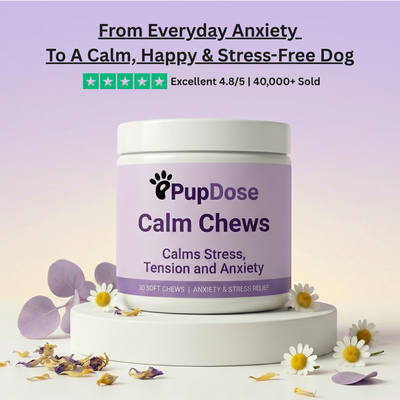
PupDose Calm Chews are made to support calm behavior, relaxation and everyday stress. For acute situations like storms, fireworks or car rides, owners typically give them 30 to 60 minutes ahead of time. For ongoing stress, most owners report noticing a change in 2 to 3 weeks of daily use. They're vet formulated with an in-house dog nutritionist, made with human-grade ingredients, formulated in the USA and lab tested, with a 4.8/5 average from verified buyers.
A quick reality check: - Calming chews support relaxation. They don't replace behavior training, a safe environment or prescribed medication. - Use them as part of a plan: safe den, sound masking, routine and reward-based training. - Try them on a calm day first so you know how your dog responds.
Every order comes with a 60-day money-back guarantee.
The bottom line
Dog anxiety is common, real and very manageable. Learn your dog's early stress signals, prepare a safe space for storms and fireworks, build alone time slowly for separation stress, and never punish fear. Bring your vet in early, especially for severe or changing behavior. With patience, a predictable routine and the right support, most anxious dogs can feel safer and more relaxed.
Frequently asked questions
What are the signs of anxiety in dogs?
Common signs include panting when it isn't hot, pacing, trembling, whining or barking, yawning and lip licking, tucked tail, hiding, drooling, destructive chewing, and accidents in the house. Some anxious dogs become clingy, while others freeze or try to escape.
How can I calm my dog during fireworks or a thunderstorm?
Prepare a quiet, interior safe space with blinds closed, play steady background sound to mask the noise, stay calm yourself, and offer chews or a stuffed toy. Comforting your dog is fine and won't 'reward' fear. For dogs with severe noise fear, ask your vet ahead of the season about a plan.
Is it okay to comfort my anxious dog?
Yes. Fear is an emotion, not a behavior you can accidentally reward. Calm, gentle reassurance helps many dogs. What doesn't help is punishing, scolding or forcing a fearful dog to face what scares them.
What's the difference between separation anxiety and boredom?
Dogs with separation anxiety show distress specifically when left alone, often within minutes: howling, destruction near doors or windows, drooling, or accidents. Bored dogs usually chew or get into things more casually and are fine when given exercise and enrichment. A camera recording while you're out can help tell the difference.
How fast do calming chews work?
For acute situations like storms or fireworks, many PupDose owners give Calm Chews 30 to 60 minutes ahead of time. For ongoing everyday stress, most owners report noticing a change in 2 to 3 weeks of daily use. Calming chews are support, not a substitute for behavior work or any medication your vet prescribes.