If your dog won't tolerate a toothbrush, you can still help keep their teeth cleaner with dental chews, water additives, wipes, sprays, dental powders, safe chew toys and the right diet. None of these remove hardened tartar, but used every day, they slow plaque and support a healthier mouth between vet cleanings.
Brushing is still the gold standard, and that's worth saying up front. But a routine you actually stick to beats a perfect routine you skip. Here's how each option works, what to look for, and how to build a plan that fits your dog.
Quick answer
- Daily brushing is the most effective home care, but it isn't the only option.
- Dental chews, water additives, wipes, sprays and food-topper powders all help slow new plaque.
- Look for products with the VOHC seal when you can, and avoid very hard chews that can crack teeth.
- No home method removes existing tartar. Only a professional cleaning under anesthesia can.
- Combining two or three easy habits usually works better than relying on one.
Why does cleaning your dog's teeth matter?
Plaque is a soft, sticky film of bacteria that forms on teeth within hours of eating. If it isn't removed, minerals in saliva harden it into tartar within a few days. Tartar gives bacteria a rough surface to cling to, and the problem spreads below the gumline, where it can lead to gum disease and tooth loss.
Most dogs show some signs of dental disease by age three. The goal of home care isn't a perfectly white smile. It's disrupting plaque often enough that it doesn't get the chance to harden.
What are the best ways to clean dog teeth without brushing?
Here's how the main options compare. Many owners use two or three together.
| Method | How it helps | Effort | Things to know |
|---|---|---|---|
| Dental chews | Chewing scrapes teeth; some have plaque-fighting ingredients | Low | Choose VOHC-accepted, right-sized chews; count calories |
| Water additives | Added to drinking water to support a fresher mouth | Very low | Some dogs drink less; check ingredients with your vet |
| Dental wipes | Wipe plaque off tooth surfaces by hand | Medium | Easier than brushing for many dogs; reaches front teeth best |
| Oral sprays and gels | Applied to teeth and gums | Low to medium | Works best when spread along the gumline |
| Dental powders | Sprinkled on food once a day | Very low | Great for picky or brush-shy dogs; results build over weeks |
| Chew toys | Encourage chewing that rubs teeth | Low | Avoid very hard materials; supervise |
| Dental diets | Kibble designed to scrub as your dog chews | Very low | Ask your vet; some are prescription |
| Professional cleaning | Removes tartar above and below the gumline | Vet visit | The only way to remove existing tartar |
1. Dental chews
Chewing creates friction that scrapes some plaque off the teeth, and many chews add ingredients meant to support oral health. Quality varies a lot. The Veterinary Oral Health Council (VOHC) seal is a helpful shortcut, because it means the company submitted data showing the product helps reduce plaque or tartar.
Tips: - Choose a size that fits your dog. Too small can be a choking risk. - Supervise chewing, especially with dogs who gulp. - Count chews as treats, since some are high in calories.
2. Water additives
These are liquids you add to your dog's water bowl each day. They're about the easiest option there is, which is why many owners like them. Some dogs notice the change in taste and drink less, so watch your dog's water intake for the first week. Read the ingredient list and ask your vet if you're unsure about anything in it.
3. Dental wipes
Wipes are textured pads you rub over your dog's teeth with your finger. For dogs who hate a brush in their mouth, a wipe can feel less invasive. Daisy, a 6-year-old Shih Tzu, wouldn't let her owner near her with a toothbrush, but she tolerates a quick wipe of her front and side teeth after her evening walk.
Focus on the outer surfaces and the gumline. Wipes reach the front and side teeth more easily than the back molars.
4. Oral sprays and gels
Sprays and gels are applied directly to the teeth and gums. They're quick, but they work best when they actually reach the gumline, so a gentle rub with your finger helps.
5. Dental powders
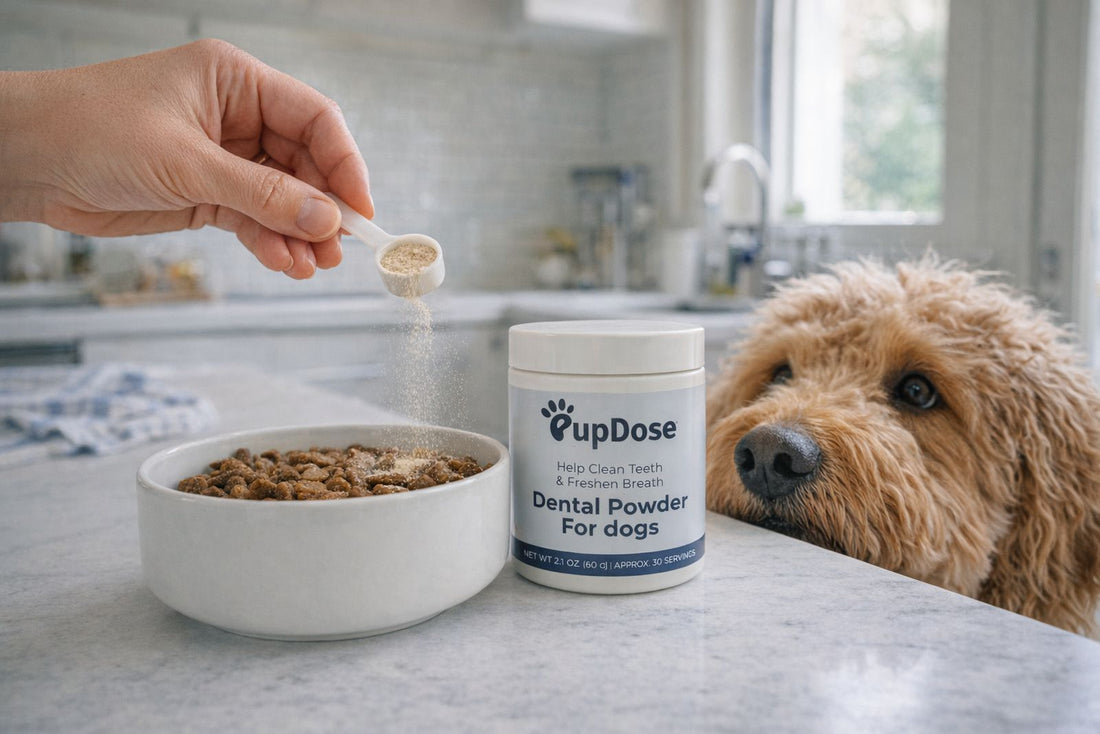
Dental powders are sprinkled on your dog's food once a day. Because they ride along with a meal, there's nothing to wrestle with, which makes them one of the easiest habits to keep. Many contain brown algae, a common ingredient in dog dental products, often paired with other ingredients that support a healthy mouth. Results build gradually with daily use.
6. Safe chew toys
Chewing is natural and good for dogs. Rubber chew toys and textured dental toys encourage it. Steer clear of anything too hard, including antlers, real bones, hooves and hard nylon. These are a common cause of fractured teeth, especially the large upper chewing teeth.
A simple rule: if you can't press a fingernail into it, it's too hard for your dog's teeth.
7. Diet
Some dental diets use larger, specially textured kibble that helps scrub the tooth surface as your dog bites down. Regular kibble doesn't do much on its own, since most dogs swallow it nearly whole. If you're interested in a dental diet, ask your vet whether it fits your dog's overall nutritional needs.
8. Professional cleanings
This is the one piece home care can't replace. Once plaque hardens into tartar, it has to be removed by your vet. A cleaning under anesthesia lets the team clean below the gumline, take dental X-rays and check every tooth. Your vet will recommend how often your dog needs one based on what they see at checkups.
What doesn't work (or isn't safe)?
- Human toothpaste. Some contain xylitol, which is toxic to dogs, and fluoride and foaming agents aren't meant to be swallowed.
- Baking soda or DIY pastes. They taste bad to dogs and aren't designed for daily swallowing.
- Scraping tartar yourself. Dental tools can injure gums and only remove what you can see.
- Anesthesia-free cleanings. Veterinary dental specialists generally don't recommend them, because the disease that matters most is below the gumline.
- Very hard bones and chews. A broken tooth is painful and often needs extraction or other treatment.
Is brushing really necessary?
Brushing is the single most effective way to remove plaque at home, so if there's any chance your dog will accept it, it's worth trying slowly. Start by letting your dog lick dog toothpaste off your finger, then rub a few teeth, then introduce a finger brush or soft dog toothbrush. Keep sessions short and end with praise.
That said, some dogs never come around. Rocky, an 8-year-old rescue terrier, panics at anything near his mouth. For dogs like Rocky, an easy daily routine with a powder, water additive or VOHC chew, plus regular vet cleanings, is a realistic and worthwhile plan.
When should I see a vet about my dog's teeth?
Home care is for keeping a healthy mouth healthy. It isn't a fix for problems that are already there. Book a vet visit if you notice:
Red flags: call your vet - Brown or tan tartar you can see on the teeth - Red, swollen or bleeding gums - Loose, broken or discolored teeth - Chewing on one side, dropping food or reluctance to eat hard food - Pawing at the mouth or rubbing the face on the floor - Swelling on the jaw or under an eye - Drooling more than usual, or blood in saliva - Breath that stays bad even with good home care
See your vet urgently if your dog has a broken tooth with a pink or dark spot in the center, sudden facial swelling, can't close their mouth, or won't eat at all.
If your vet recommends a cleaning or extractions, it's best to get that done first, then start your home routine on a clean slate. Daily care works best at keeping clean teeth clean.
How does a daily dental powder fit in?
For many families, the best dental routine is the one that happens every single day without a fight. That's where a food-topper powder shines.
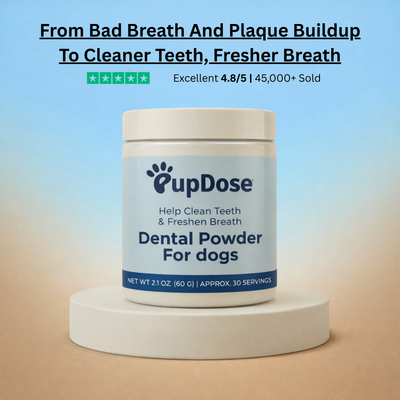
PupDose Dental Powder is a no-brushing daily option. You sprinkle one scoop on your dog's food once a day. It contains brown algae and a probiotic blend to support fresher breath, cleaner-looking teeth and a healthy mouth. Most owners notice fresher breath in 2 to 3 weeks and cleaner-looking teeth in 4 to 8 weeks.
It's vet formulated with an in-house dog nutritionist, formulated in the USA, made with human-grade ingredients, lab tested and handcrafted in small batches. It holds a 4.8/5 average from verified buyers.
Keep it in perspective: - A dental powder supports oral health. It doesn't remove existing tartar or replace professional cleanings. - Follow any treatment plan your vet recommends, including cleanings and medications. - If your dog accepts brushing or wipes, keep doing them alongside the powder.
Every order comes with a 60-day money-back guarantee.
The bottom line
You don't have to win the toothbrush battle to take good care of your dog's teeth. Pick two or three easy habits, like a daily dental powder, a VOHC-accepted chew and a quick wipe when your dog allows it. Skip hard bones and human toothpaste, and keep up with vet checkups and professional cleanings. With a routine you can stick to, cleaner teeth and a happier mouth are well within reach.
Frequently asked questions
Can you clean a dog's teeth without brushing?
Yes, you can help keep your dog's teeth cleaner without brushing by using dental chews, water additives, wipes, sprays or a daily dental powder. These slow new plaque build-up. They can't remove hardened tartar, and brushing is still the most effective home care if your dog will accept it.
How can I remove plaque from my dog's teeth at home?
Soft plaque can be wiped or brushed away, and daily habits like dental chews, water additives and dental powders help slow how fast it builds. Once plaque hardens into tartar, it can only be removed safely by your vet during a professional cleaning.
Do dental chews actually work for dogs?
Some do. Look for chews that carry the Veterinary Oral Health Council (VOHC) seal, which means the maker submitted data showing the product helps reduce plaque or tartar. Pick the right size for your dog, supervise chewing and count chews toward daily calories.
Is anesthesia-free dental cleaning safe for dogs?
Veterinary dental specialists generally don't recommend it. Scraping only the visible tartar makes teeth look cleaner but misses disease below the gumline, can't include dental X-rays and can be stressful for dogs. A cleaning under anesthesia lets your vet clean and check every tooth safely.
How long does it take for a dental powder to work?
Dental powders work gradually with daily use. Most PupDose owners notice fresher breath in 2 to 3 weeks and cleaner-looking teeth in 4 to 8 weeks. A powder supports a daily routine and doesn't replace professional cleanings.